Contents5 sections
AI Hardware is a Tale of Two Tools: The Drag Racer and the Sports Car
Let's get one thing straight: anyone who says one type of AI hardware is definitively "better" than another is likely trying to sell you something. As engineers, we know the truth is about trade-offs. The current landscape is best understood by looking at the two primary use cases, best explained with an analogy: the drag racer versus the sports car.
Your choice of hardware depends entirely on which one you're building for.
The Drag Racer: NVIDIA for PROD and Development
An NVIDIA H100 or RTX 5090 in a Linux machine is a top-fuel drag racer. It is engineered with a singular, obsessive purpose: maximum throughput. This is the only choice for two critical domains: model development and production-grade inference.
- The Goal: Process the largest possible batch of data at the highest possible speed. This is the metric that matters for large-scale training and high-volume backend inference running in production.
- The Trade-Off: Like a dragster, it consumes enormous amounts of power and generates immense heat. Its performance comes at the cost of all other efficiencies.
- The Ecosystem: The CUDA software stack is the specialized fuel and crew chief for this machine. For the foreseeable future, true model development will always happen here. The ecosystem is simply too deep to ignore.
For the single task of a quarter-mile sprint—a massive training job or a production inference workload—the drag racer is the undisputed champion.
The Sports Car: Apple Silicon for Local Inference
Apple Silicon, with its Unified Memory Architecture (UMA), is the shop tuned Porsche 911 of the AI world. It's not built to win a drag race against the NVIDIA machine, but it has carved out an increasingly dominant niche: local inference.
- The Goal: A balance of strong performance, excellent responsiveness, and incredible power efficiency.
- The Trade-Off: While it will lose a raw throughput race, it excels in the metrics that matter for running a model on a personal device.
- The Experience: This efficiency is why tools like Ollama, Exo, and more, run so well on macOS. Apple Silicon is allowing powerful models to run locally without turning a laptop into a screaming hot paperweight. For the complex demands of running AI on a personal device, the balanced engineering of the sports car provides a superior experience, and with each generation of M-series chips, Apple's capability in this specific domain seem to be improving fast.
Key Engineering Takeaways
1. Know if You're on a Racetrack or a Public Road
The first question must be: "What is my performance metric?" If it's pure, server-side throughput for a production environment, where customers are involved, you need the NVIDIA drag racer. If it's an efficient user experience on a local device, you need the Apple sports car. They are not interchangeable.
2. The Cloud is the Racetrack; Your Laptop (or desktop!) is the Street
This analogy extends really well. You rent the drag racer (cloud H100s) for your big race (large-scale training). But you do your daily driving and iterative R&D in your personal sports car (a local machine), where convenience matters most.
3. Do we stop Saying "Better," and start saying "Different Use Case"
The hardware has specialized. Recognizing the distinct use case for each platform—PROD vs. Local—is the mark of an experienced engineer.
The Final Word
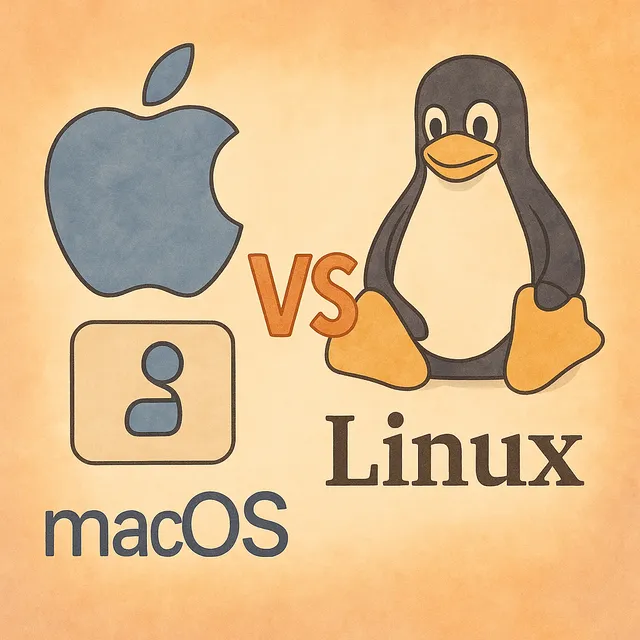
The conclusion is simple. The platforms have diverged to solve different problems with near-perfect focus.
Model Development and Production Inference belong to the Linux/NVIDIA world. This is the industrial-scale, maximum-power use case. For now and the foreseeable future, this is unlikely to change.
Local, user-facing inference belongs to Apple Silicon. This is the personal-scale, maximum-efficiency use case, made accessible by a brilliant software ecosystem built on an elegant hardware foundation—and it's getting better at a remarkable pace.
Don't pick a favorite. Just pick the right tool for the job... and don't get me started on Google's TPU's!
Originally published on labs.straker.ai.