Contents4 sections
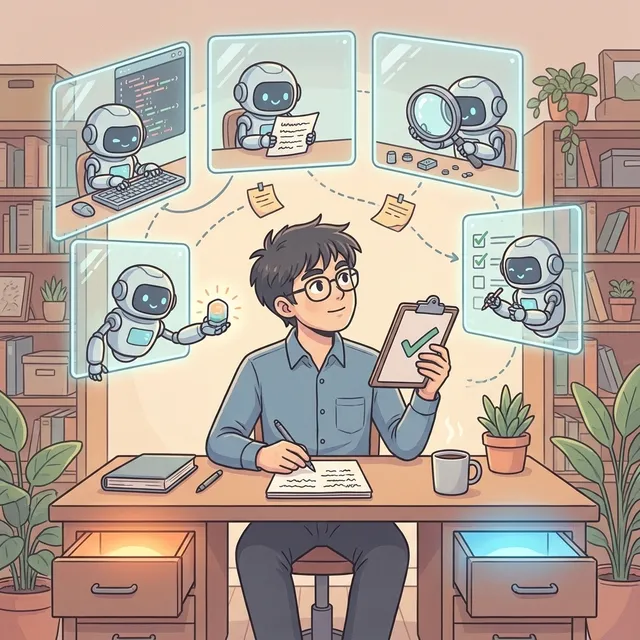
I run something like a dozen or more agent trees on a normal day. Each has its own project or outcome and its own context. Not all of it is code. There is research, discovery, operations and the work of thinking something through.
As I wrote on LinkedIn, some days this feels like overkill. What keeps me working on it is the pace I can sustain and the attention it frees for the things that need me.
I am optimistic about AI, and impatient with how much of the conversation stops at the model. Model capability matters. I build models, so I am hardly going to argue otherwise… But a capable model does not automatically make a dependable working system.
I use Orca, an agent development environment, to organise work across these projects. It has moved my attention towards what we need to build around the model.
Prepare the work
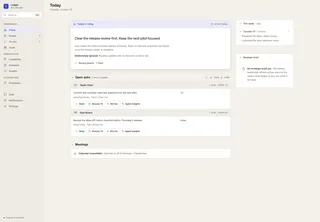
Ledger, the app I built to track commitments and working context, helps establish the day’s work from open asks and running to-dos. Before the agents start, I work through priorities, plans, dependencies and decisions with them. We need to agree what they can decide and how they will demonstrate that the work is done.
An agent cannot resolve a priority I have not chosen simply by reasoning harder. It may produce a plausible implementation of something I did not need.
One of my Orca projects is a leadership agent. It works alongside Ledger when I need more context, a deeper conversation or help finding the questions I should ask. It is a sounding board, not the ‘boss’ of the engineering agents. I need it to challenge assumptions, not agree with everything I say. I still set the direction.
I described the change in my own role as “dispatch and judgement”. Preparing work and judging its outcome are still engineering work. Less of that work happens through my own keystrokes.
Separate the work
I do not want one agent carrying my whole working day…. and nor should you.
Keeping agents and harnesses separate has helped me manage cost and context. When a session compacts its history, it can stay focused on its task. If one goes sideways, I can address it without untangling every other project’s conversation. I can also put another agent on a problem when I want a second opinion.
Orca gives this a practical structure. Project orchestrators divide larger tasks and start workers in separate worktrees, so they are not all editing the same checkout.
Isolation helps, but it is not coordination. Separate worktrees do not resolve incompatible designs or shared dependencies. Separate conversations are not security sandboxes. The agents still need to understand how their work fits together.
Connect the context
In my LinkedIn post, cross-agent communication was the next problem I was working on. It has since opened up more of the workflow. An orchestrator can ask another for a previous decision, a dependency update or a technical second opinion. Those questions do not always need to come back to me. To achieve this, I forked and rebuilt ‘intercom’ for OMP. https://github.com/JoshTickles/omp-intercom
The challenge is getting agents to use that communication appropriately. Agreement between two agents is not proof. Sometimes they need to inspect the source; sometimes they need my judgement.
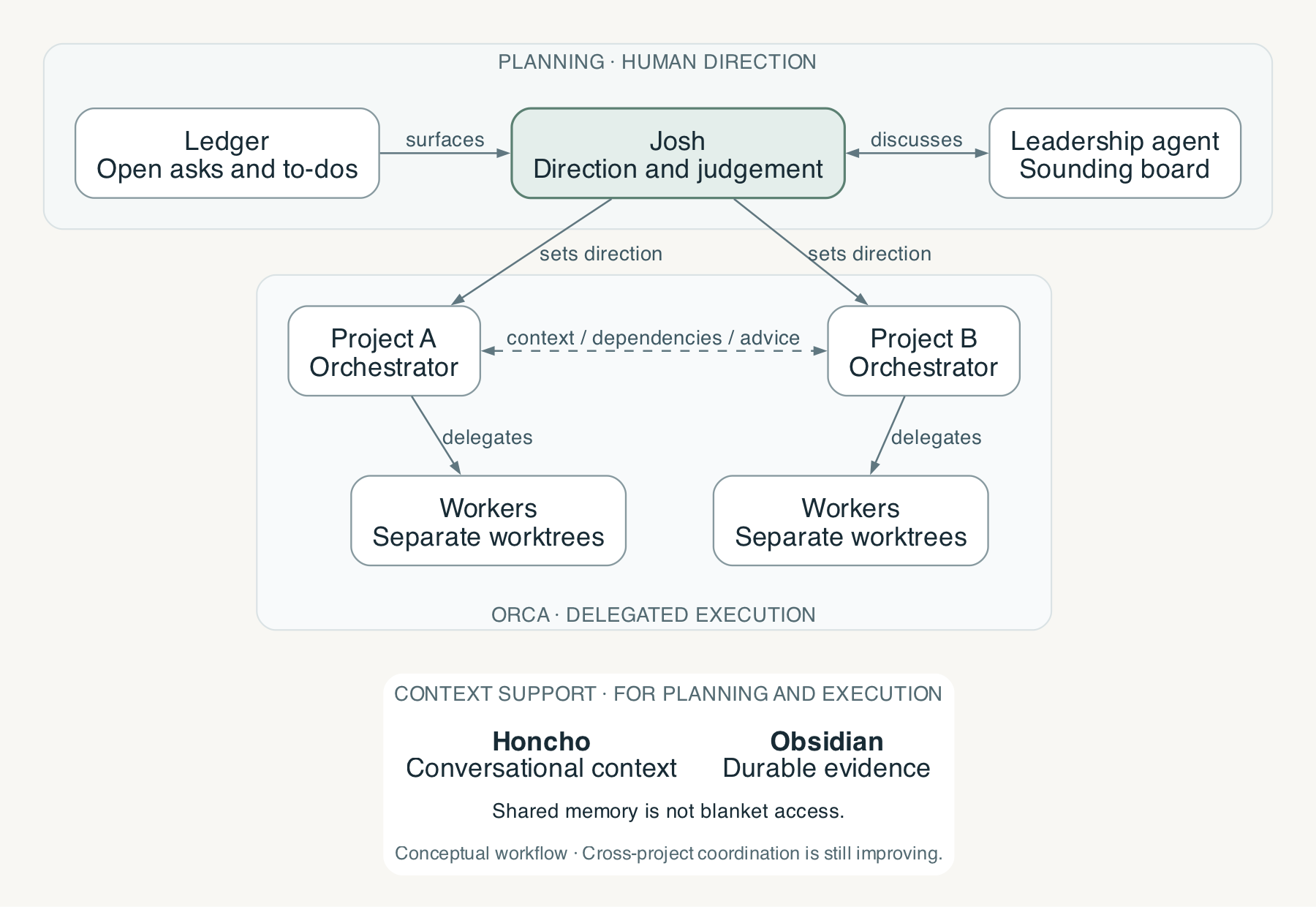
Conceptual workflow, not an access-control map.
Shared memory provides continuity underneath those separate conversations. I use Honcho, a memory service, to help bring relevant context between sessions, and Obsidian, my Markdown-based notes workspace, for the durable working record: notes, plans, decisions and evidence.
I think of Honcho and Obsidian as hot and cold memory: context an agent can bring into a conversation, and records it can deliberately inspect. This is a useful working distinction, not a description of their storage architecture.
Neither layer should be treated as unquestionable truth. Plans change, conclusions go stale and new evidence corrects old assumptions. Memory needs maintenance, not just accumulation. Remembering a decision does not automatically authorise a new action.
Keep judgement human
Agents still stop for input. Some should consult another agent first. Others are asking a genuine question that I need to answer. Orca Mobile helps me respond without returning to my desk, but I am still finding the right boundary.
I do not want a system that never asks. I want one that asks the right questions in the right place!
I also need evidence appropriate to the work. An application change needs to work in the application. An infrastructure change needs evidence from the running system. A recommendation needs grounds I can inspect. A confident completion message is not enough.
My DevOps background strongly shapes this view. Isolation, persistent state, visible failures and ways to intervene remain important when the operator is an agent. Instructions help, but telling an agent to respect a boundary is not the same as enforcing it.
Anne-Julia Seitz’s account of using Orca describes a related shift towards supervising an environment where agents operate the tools.
How does work become ready? Where does context live? Can agents find the person or project that owns a dependency? What requires human judgement? What evidence supports a claim of completion?
Those questions deserve as much attention as the choice of model.
The biggest change is not how quickly I can produce code. It is where I spend my attention. More of my work now goes into deciding what matters, preparing it properly, connecting the right context and judging the result.
That is why I think harness engineering deserves serious attention. As models become more capable, we can give them more meaningful work. But we still have to establish who owns a decision, what an agent needs to know and how we will tell whether the work is actually done.
I want agents to carry more of the work, not more of the ambiguity. For me, that is the next engineering challenge: building systems I can delegate to without becoming the dependency for every step.